Choosing a creative platform isn’t just about producing more ads, faster. It directly impacts how well your digital advertising performs, how teams collaborate across markets, and how confidently you can scale creative as complexity grows.
Platforms like Celtra and Bannerflow are often compared by marketing teams looking to streamline creative operations. While both aim to simplify creative production, their approaches to solving marketers’ challenges differ significantly – especially when scale, governance, and performance come into play.
In this article, we take a closer look at both platforms, examining how each of them supports creative automation, workflows, AI, and long-term scalability, so you can choose the platform that best fits your organization today and where you’re headed next.
What is Bannerflow, and when does it work best?
Bannerflow is a creative automation platform primarily focused on display advertising. It helps teams version, publish, and manage digital banner campaigns efficiently, making it a practical option for organizations running standardized display campaigns with relatively simple creative requirements.
For small to mid-sized teams primarily running display ad campaigns, Bannerflow offers a straightforward way to automate production, reduce manual work, and accelerate time-to-market. Its single master design approach works well when campaigns follow predictable patterns and don’t require extensive customization, advanced personalization, or complex workflows.
Why do teams start looking for a Bannerflow alternative?
As advertising operations grow, creative needs tend to become more complex. Teams expand across regions, product catalogs increase, personalization becomes more sophisticated, and performance expectations rise.
This is often when organizations begin exploring Bannerflow alternatives. Common reasons include the need for:
- Greater creative flexibility beyond single master designs
- More structured workflows and approval processes
- Better support for large product feeds and data reliability
- Deeper creative performance insights and predictive intelligence
- Stronger partnership and guidance as complexity rises
At this stage, teams look beyond production automation and toward platforms that support scalable, high-performing digital advertising.
Celtra as an alternative to Bannerflow
Celtra is an enterprise creative platform designed for brands operating at scale. It helps teams create, personalize, and optimize digital advertising across markets and channels – without sacrificing creative quality or performance.
Unlike platforms focused primarily on production automation, Celtra supports the entire creative lifecycle: from brand-safe agentic workflows to AI-driven creative intelligence and omnichannel activation.
Celtra is built for organizations that treat creative as a core performance lever across the business.
At a glance: Celtra vs. Bannerflow
Here’s a high-level look at how the two platforms stack up.
| Focus area | Celtra | Bannerflow |
|---|---|---|
| Creative quality & flexibility | Advanced design and animation with unlimited variety | Limited design and feed capabilities; extra costs for custom work |
| Marketer empowerment | Modular templates for fast, independent, on-brand activation | Single master design limits flexibility and execution speed |
| AI capabilities | Brand-safe GenAI and predictive creative intelligence pre-launch | AI-assisted production and campaign optimization post-launch |
| Delivery & media optimization | Creative-level delivery optimized by performance insights | Campaign-level delivery with automated rules |
| Reporting | Deep creative production and performance analytics | Basic metrics with limited asset-level insights |
| Best for | Enterprise teams aiming to improve ad effectiveness | Smaller teams prioritizing speed and display execution |
This overview tells part of the story. The real differences emerge as teams grow, workflows become more complex, and performance expectations rise. The sections below take a closer look at how those differences show up in practice.
Benefits of using Celtra instead of Bannerflow
1. Scaling creative without sacrificing freedom
In creative automation, speed matters – but not if it comes at the cost of flexibility.
Bannerflow is designed for fast execution within the display ecosystem. Its single master design approach allows teams to quickly version banners across sizes and formats, which works well for standardized, repeatable campaigns.
As creative needs grow more complex, however, this efficiency can become a constraint. Local market adaptations, multiple creative concepts, or richer animations often require workarounds or custom development.
Celtra takes a different approach, built around creative variety and modular design systems. Modular templates allow teams to activate campaigns independently while staying on-brand, across markets, formats, and channels.
The result isn’t just faster production. It’s scalable creative freedom, where automation supports creativity instead of narrowing it.

2. Workflow structure within enterprise teams
Scaling creative isn’t only about volume. It’s about coordination.
Bannerflow provides collaboration tools that support content creation and publishing, but many teams find workflows harder to manage as organizations grow. Limited role definitions and less structured approvals can introduce friction, particularly in enterprise environments where governance matters.
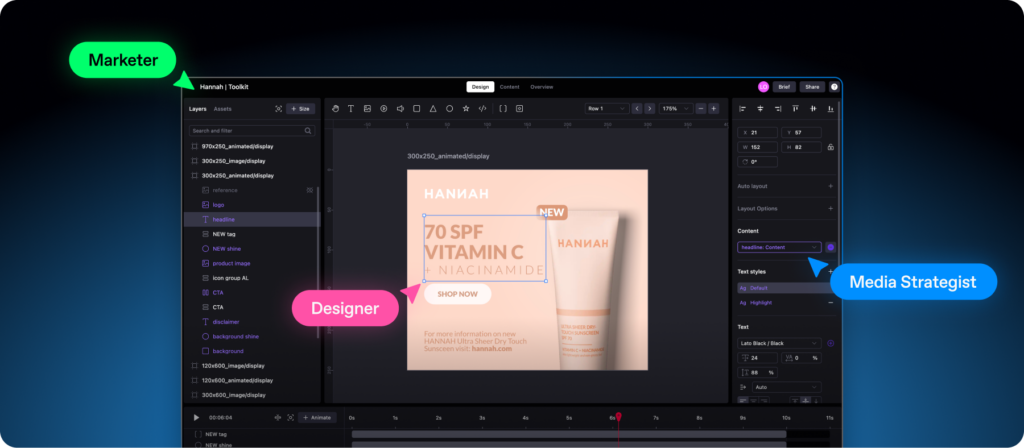
Celtra connects marketing, creative, and media teams through a unified, end-to-end workflow. Multi-level approvals, granular user roles, and built-in governance make it easier to move fast without losing control — even when hundreds or thousands of assets are in play.
“Cross-collaboration across multiple teams and markets is significantly more efficient when working from a shared foundation.”
— G2 Celtra reviewer
For large teams, this structure enables creative operations to scale sustainably without sacrificing control.
3. Platform stability and data reliability
Personalization at scale depends on something that rarely gets the spotlight: feed reliability.
Bannerflow uses a campaign-level optimization model powered by dynamic feeds and decision rules. While effective for many display use cases, managing very large product catalogs or coordinating content through external spreadsheet-based workflows can add technical complexity.
“There are some bugs from time to time that take time to solve. We have had problems lately with our sheet that is linked to the feeds/templates.”
— G2 Bannerflow reviewer
Celtra handles enterprise-scale feeds natively, with built-in personalization logic at both creative and component levels. This reduces reliance on external tools and minimizes the risk of broken feeds disrupting live campaigns.
In practice, that means fewer workarounds — and more confidence when scaling personalization across products, markets, and channels.
4. Automation vs. intelligence: how AI impacts performance
AI is everywhere in marketing conversations — but not all AI delivers the same value.
Bannerflow primarily uses AI as an assistive layer to streamline creative production and automate optimization after launch. This approach improves efficiency, but offers limited guidance before media spend begins.
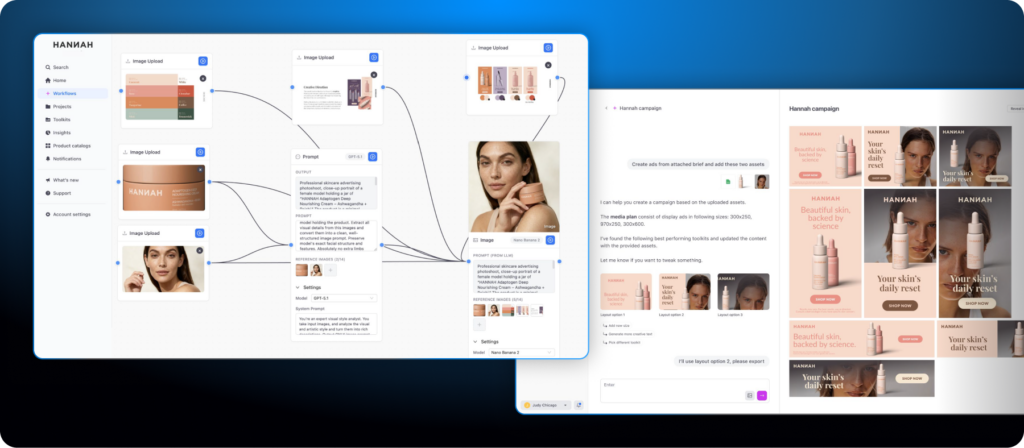
Celtra uses AI as a decision-making layer, applying creative intelligence across the full campaign lifecycle. From generative AI and predictive scoring to asset-level performance insights, Celtra helps teams evaluate creative effectiveness before launch and continuously improve results.
This shift from reactive optimization to proactive decision-making helps teams protect both creative quality and media investment.
5. Support and partnership beyond implementation
As creative complexity grows, reliable support becomes part of the platform experience.
Bannerflow provides standard customer support to help teams manage day-to-day platform use. For many smaller teams, this is sufficient.
Celtra takes a more embedded approach to partnership. Enterprise customers work closely with dedicated support and product teams and can also leverage Celtra’s creative services to design scalable creative systems, accelerate execution, and improve advertising performance.
The result is a long-term partnership that evolves alongside your creative operations.
Summary: Which platform is right for you?
Bannerflow may be a good fit if you:
- Are a small to mid-sized organization
- Run relatively simple display campaigns
- Prioritize fast versioning and lightweight automation
- Seek to use AI primarily as an assistive layer for production automation
Celtra is designed for teams that:
- Operate at enterprise scale
- Need consistent execution across markets and channels
- Aim to improve ad effectiveness and creative excellence
- Seek to use AI as a decision-making layer to drive creative intelligence across the full campaign cycle
Ready to learn more about Celtra?
If your team is moving beyond basic automation and starting to feel the friction of scale, Celtra can help create, optimize, and scale high-performing digital advertising with confidence.
Frequently Asked Questions
Bannerflow is often easier to get started with for teams running simple display campaigns, thanks to its more limited feature set. Celtra has a steeper learning curve, but that investment pays off for teams managing complex creative systems, multiple markets, or advanced personalization.
There is overlap in basic display use cases. As complexity increases, Celtra supports a broader range of use cases, including omnichannel creative, advanced DCO, large product catalogs, and performance-driven optimization.
Yes. Platforms, like Celtra, that offer deeper creative insights and predictive performance signals help teams make better decisions earlier, which can directly impact advertising results
Pricing for creative platforms like Celtra and Bannerflow typically depends on your specific use case, expected usage and number of seats. To find out about Celtra’s pricing get in touch and our team will work with you to prepare a personalized quote.