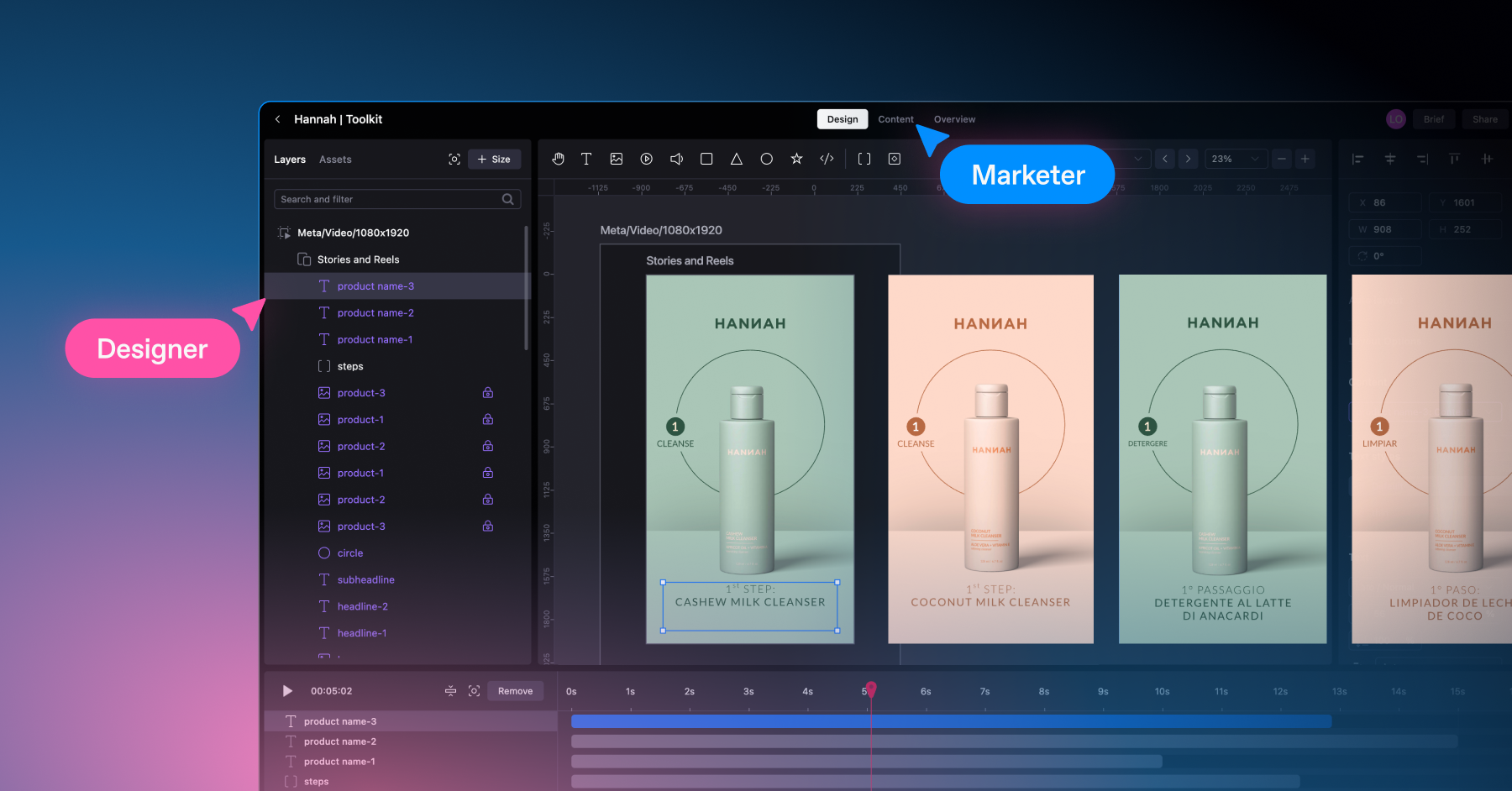
Relevance is the difference between an ad that works and an ad that disappears. Forrester reports that 37% of media spend is wasted due to poor targeting, showing how often campaigns fail before creative even enters the picture. Targeted advertising is how media teams move away from that waste and toward intentional, audience-first delivery.
When marketers pair accurate signals with tailored creative, results improve on both sides. People see ads that feel useful, not random, and marketers get more value out of every impression. This blog breaks down what targeted advertising is, the main types, the privacy essentials, and the tools to create and scale tailored ad variations.
Key Takeaways
- Targeted advertising delivers ads to specific audiences using signals like location, interests, and behavior.
- Geographic, demographic, interest-based, behavioral, retargeting, and contextual targeting each rely on different signals, so the practical approach is to start with the signals you already have and expand as more data comes in.
- Effective targeting depends on transparency and consent: favor first-party data and contextual signals, avoid sensitive attributes, and give people a clear way to opt out.
- Celtra’s Creative Enablement platform connects targeting strategy to production, helping media teams build fast-loading rich media and video ads that match each audience segment.
What is targeted advertising?
Targeted advertising is the practice of delivering ads to a clearly defined audience using signals such as location, interests, behavior, and the real-time context of the page or app. The goal is to match message and moment so the ads people see feel useful rather than random.
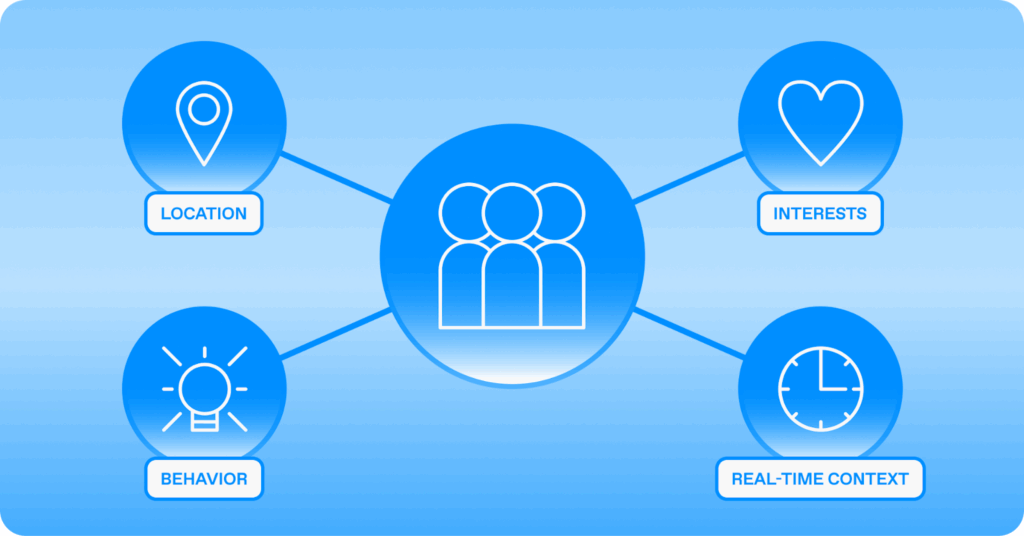
For media teams, targeted advertising means delivering messages to specific audience segments using data signals, then optimizing spend based on how each group responds. For customers, it reduces irrelevant noise and surfaces offers that genuinely fit their needs and interests. When relevance increases, everyone benefits.
Types of targeted advertising
Most campaigns combine a mix of targeting approaches depending on your goals, channel strategy, and creative capacity. Start with the signals you already have, then expand as you collect more actionable insights. The key is pairing each targeting method with creative that directly speaks to the audience it’s meant to reach.

Geographic targeting
Geographic targeting serves ads by country, region, city, or a tight radius around a store or event. It’s ideal for campaigns where location impacts availability, timing, or message relevance.
💡 Example: A grocery chain adapts its CTA and local retailer logos based on the viewer’s detected ZIP code, making the message feel relevant to where they actually shop.
Demographic targeting
Demographic targeting reaches broad groups based on age, household income, education level, or life stage (where platform policies permit). It’s one of the most common approaches used in targeted advertising, especially when you have a clear segment but limited intent data.
💡 Example: A financial services brand invites people nearing retirement in one metro area to a planning webinar, tailoring copy to milestones like mortgage payoff or shifting financial priorities.
Interest-based targeting
Interest-based targeting uses declared or inferred passions from content engagement, creator follows, subscription behavior, or topic affinity. It shines when your product naturally connects to communities or hobbies.
💡 Example: An outdoor brand promotes a new trail shoe to people who regularly interact with hiking creators or long-form trekking guides, highlighting stability and durability on challenging routes.
Behavioral targeting
Behavioral targeting uses actions such as product views, add-to-cart events, search activity, and repeat visits to signal intent. It’s one of the strongest mid-funnel strategies for moving people from consideration to conversion.
💡 Example: A beauty brand shows shade-finder content to visitors who explored foundation pages but didn’t complete a purchase, helping them confidently choose a match.
Retargeting
Retargeting re-engages people who have already interacted with your brand through product views, abandoned carts, app activity, or email clicks. It keeps your offer visible while they compare options and move toward a decision.
💡 Example: A travel company reminds recent searchers about flights to Lisbon and highlights a limited-time fare drop to encourage them to complete their booking.
Contextual targeting
Contextual targeting places your ad next to content directly relevant to your message, no personal data required. It’s privacy-friendly and exceptionally strong when the creative reflects the surrounding content.
💡 Example: A fitness app promotes its strength-training program on articles about progressive overload, using visuals and copy that match the theme of the content.

Celtra Creative Enablement gives media owners and operators everything they need to build and launch premium rich media and video ads at scale. It connects your targeting strategy with the tools to turn ideas into fast-loading, high-quality formats that capture attention and boost monetization.
With automated workflows and seamless tag generation, teams can activate premium ad products in minutes or build custom experiences without slowing down production.
Privacy and ethics
Effective targeting should feel transparent, respectful, and genuinely helpful. People deserve clear consent choices, simple explanations of data use, and the ability to opt out without friction. Favor first-party data and contextual signals, avoid sensitive attributes, and maintain accurate documentation of where your targeting data comes from.
Practical guardrails to follow
Collect only the data you need to deliver the experience you’ve promised, and audit that collection regularly. Align your creative with the sensitivity of the signals you use so the ad feels helpful rather than intrusive. When in doubt, default to contextual signals or first-party data that customers have knowingly shared.
Platforms like Celtra help media teams keep these guardrails in place by simplifying creative adaptation and supporting privacy-friendly ad products without extra production lift. Reach out to our team and see the platform in action.
From targeting to outcomes
Getting the audience right opens the door; creative earns the click. Build a simple message map for each audience that defines the problem you solve, the proof you’ll show, and the action you want them to take. Create purposeful variations so your ideas flex across segments, placements, and formats while preserving brand consistency.
Tools that make production practical
You don’t need more hours – you need production that scales. Look for tools that let you generate multiple on-brand variations from a single master concept and personalize elements like headlines, images, products, and CTAs. Prioritize platforms like Celtra, which activate dynamic signals (time, weather, location, language, first-party audiences), allow updates without retagging, and provide asset-level insights to understand what resonates.
Frequently Asked Questions
Targeted advertising is the practice of delivering ads to specific audience segments using signals like location, interests, behaviors, and context. Learn more in our posts on personalized ads and weather-based ads.
It works by collecting signals, segmenting audiences, delivering tailored creative across coordinated channels, and optimizing based on performance data.
Targeted advertising helps media teams reduce wasted impressions, improve efficiency, and understand which segments respond best to different messages. It also makes creative testing more meaningful, since performance signals come from audiences with real intent rather than broad, unfocused reach. This leads to better allocation of spend and stronger, more predictable results over time.
Most targeting uses a combination of first-party data (like website behavior, purchase history, and email engagement), contextual data (page content, keywords), and platform-level signals (location, interests, demographics). As privacy standards evolve, media teams are increasingly prioritizing first-party and contextual signals because they’re more transparent, reliable, and sustainable long term.