AI has fundamentally changed what creative automation platforms can do. Producing hundreds of ad variations in minutes has become a baseline. The question enterprise teams are now asking is what comes next: how do you know which of those variations will work, where they should run, and what to do differently next time to improve ad performance?
That is the question that separates Celtra and Pencil. Pencil is built around the generation side of that equation: producing and testing high volumes of AI-assisted creative quickly, limited to select digital channels. Celtra is built around production efficiency and ad performance, with integrated AI that reliably improves outcomes rather than just accelerating output. The goal is to connect every creative decision to a measurable media result across every channel.
This comparison looks at how each platform approaches creative quality, AI, brand governance, omnichannel reach, and performance intelligence, so you can determine which is the right fit for your organization.
What is Pencil AI, and when does it work best?
Pencil positions itself as an AI-powered ad generation platform for performance marketers. Its core promise is a rapid generation of creative variations using GenAI and performance predictions.
Pencil is owned by The Brandtech Group, a global marketing services organization. For brands evaluating it independently, it is worth noting that product priorities are shaped by the broader strategic direction of its parent group, not solely by the needs of the brands using it.
Pencil works well for teams that:
- Need to generate and test high volumes of AI-assisted ad creative quickly, particularly for paid social and digital channels.
- Don’t require high-level brand governance across markets or agencies.
- Want rapid creative testing across social campaigns.
Pencil’s core strengths sit in AI-assisted generation and paid social activation. Where it falls short is in structured global-to-local adaptation, creative reuse, and controlled iteration across markets. The platform produces new creative quickly but offers limited governance over how that output is managed, adapted, and built upon at scale.
What is Celtra, and when does it work best?
Celtra is a creative intelligence platform built for enterprise brands that treat advertising creative as a primary driver of performance. It combines advanced design tools, AI-powered modular production, predictive scoring, omnichannel activation, and a direct feedback loop from creative decisions to media outcomes — all in one unified system.
Celtra works well for organizations that need to:
- Scale on-brand creative across markets, formats, and channels without sacrificing quality or governance.
- Apply AI throughout the creative lifecycle — not just at generation, but at scoring, optimization, and learning.
- Leverage AI intelligence for performance insights and optimization, not just generation.
- Activate across 100+ media channels, including programmatic, display, DOOH, CTV, and retail media.
- Maintain brand governance at scale with modular design systems built for reuse and iteration.
With 450+ enterprise clients, 119B+ impressions delivered annually, and 17M+ ads distributed every year, Celtra is the platform of choice for brands like Unilever, Puma, Wolt and Spotify, where creative excellence, governance, and advertising performance are inseparable.
At a glance: Celtra vs. Pencil
Here is a high-level comparison of how the two platforms stack up across the dimensions that matter most to enterprise marketing teams.
| Capability | Celtra | Pencil |
| Creative quality | Modular, on-brand templates with automated production, localization, and activation. | Generation-first; no structured template system or cross-channel activation workflow. |
| Omnichannel reach | Full omnichannel: social, programmatic, display, video, DOOH, CTV, retail media, 100+ integrations. | Supports paid social and select digital channels, no full omnichannel execution. |
| Ad serving & decisioning | Native ad serving, DCO, and creative-led performance optimization built in. | Publishes to ad platforms; no native ad-serving logic or creative decisioning. |
| AI capabilities | Brand-governed GenAI, predictive scoring, creative performance intelligence across the full lifecycle. | Predictive AI, GenAI for text and images, unclear governance. |
| Brand governance | Built-in permissions, modular design systems, approval workflows, and governance enforced at every step. | Brand guardrails on Pro plans; governance depth varies by tier. |
| Client support | Dedicated onboarding, consulting, and creative services. | Self-onboarding on lower tiers; dedicated CS on higher tiers only. |
The table above captures the key structural differences. Below, we examine the main factors to consider when selecting a solution for your operations.
Key considerations when comparing Celtra and Pencil
1. How far does AI go in each platform?
Both platforms use AI as a core capability, but they apply it at different depths and for different purposes.
Pencil primarily uses AI to accelerate the generation of ad creatives, enabling quick production and testing. Its predictive scoring draws on historical performance data to help teams identify likely winners before launch. However, for teams needing contextual intelligence across a broader channel mix, the depth is more limited.
Celtra applies AI as an intelligence layer across the full creative lifecycle:
- Brand-governed GenAI that generates on-brand variations within structured design systems.
- Predictive performance scoring that evaluates assets before launch within contextual frameworks — accounting for market, objective, and channel.
- Creative performance intelligence that identifies which specific elements are driving results across campaigns.
- Agentic workflows that connect generation, approval, activation, and optimization in one governed system.
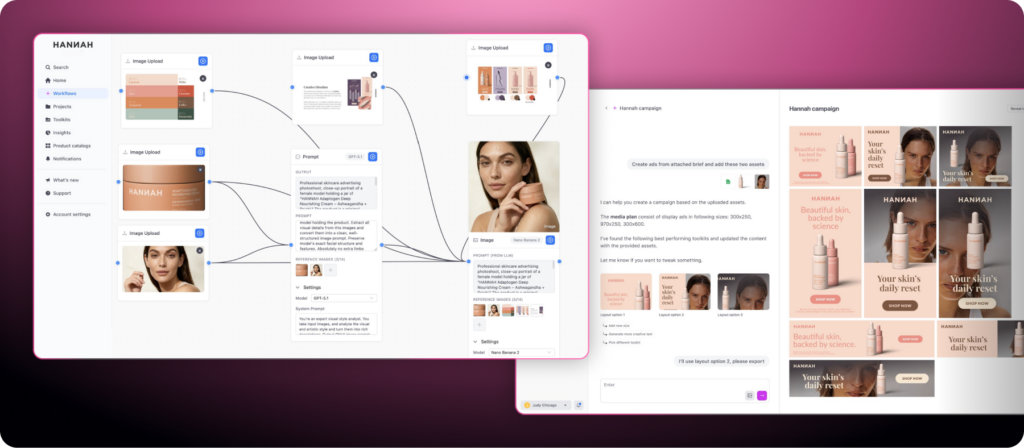
The distinction is not which models are available, but what the AI is asked to do. Pencil optimizes for generation throughput. Celtra optimizes for creative effectiveness across the entire creative and media process, building institutional knowledge that makes each campaign smarter than the last.
“The incorporation of an AI assistant and workflow features to create new adaptations and variations of concepts makes things much easier.”
2. Does your creative need to reach beyond paid social?
This is one of the most significant practical differences between the two platforms.
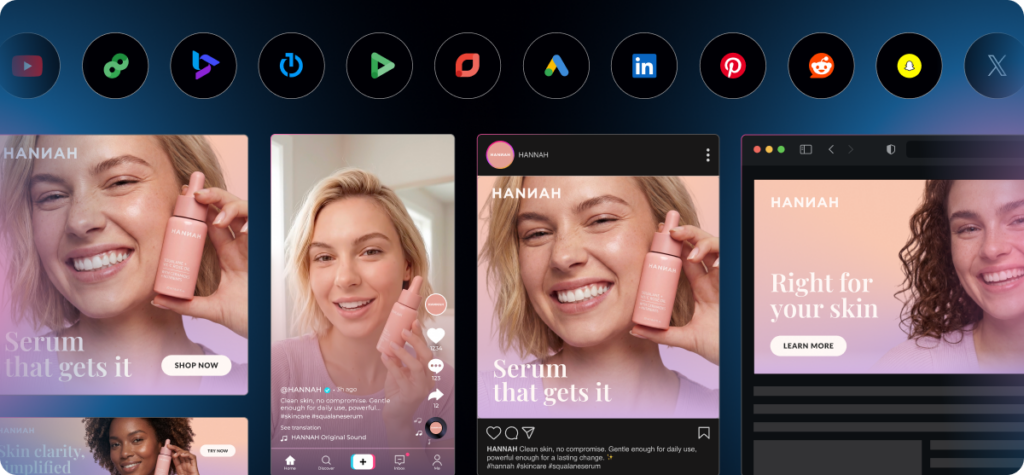
Pencil’s activation capabilities are centered on paid social and selected digital channels. For brands whose primary creative challenge lives on these channels, that coverage is sufficient. For brands running campaigns across programmatic, display, DOOH, CTV, retail media, or the open web, Pencil’s channel support is limited.
Celtra activates across 100+ media channels natively. Social, programmatic, display, video, DOOH, CTV, and retail media, all within the same platform. Creative logic, format specifications, and performance tracking are unified, meaning teams do not manage separate tools for different channel types.
For enterprise brands running campaigns across multiple channels, this is the difference between a unified creative operation and a fragmented one
3. How important is creative quality and design control?
AI generation has made it easier than ever to produce large volumes of ad creative. The harder question is whether that creative meets the quality bar that enterprise brands require.
Pencil’s output quality is directly tied to the strength of the prompt and the quality of brand assets fed into it. For teams with well-structured brand libraries and strong prompting discipline, results can be high quality. For teams that need consistent professional-grade output across global markets, the variability of generative output can create governance challenges.
Celtra is built on a professional-grade design environment and considers creative quality as a strategic lever. Node-based GenAI environment, modular design systems, keyframe animation, HTML5 support, and full in-platform editing give creative teams the control and quality they need regardless of scale.
“The intuitiveness for generating automated content and the ease of creating great quality content, the ability to generate so many assets, does not sacrifice quality.”
4. How does brand governance scale across teams and markets?
For enterprise brands operating across multiple markets, agencies, and teams, governance is as important as production speed.
Pencil includes brand guardrails, but it requires upfront investment in building a comprehensive brand library, and the depth of control varies significantly by plan tier.
Celtra embeds governance into the platform architecture itself. Role-based permissions, modular design systems, structured approval workflows, and live file management ensure brand compliance scales as the creative operation scales – not as a feature on a higher tier, but as a structural foundation.
“Celtra helps me templatize variations for different channels in over thirty country markets, which is key given my high-volume workload with limited resources.”
5. How does each platform turn creative decisions into performance insights?
Generating creative and measuring whether it works are two different capabilities, and the gap between them is where most enterprise teams lose value.
Pencil provides predictive scoring based on past campaign data to spot which concepts are likely to perform better before going live. It is a useful starting point, however, it only highlights what has worked before across similar ads, not what will work for this specific campaign, in this market, on this channel, for your specific objective.
Celtra closes the loop more completely by providing predictive scoring within contextual performance frameworks that account for market, campaign objective, and channel. That means predictions are grounded in the conditions the asset will actually run in, not just historical benchmarks. Native ad serving, DCO, and creative performance intelligence connect specific creative elements to actual media outcomes across channels. Teams are not just learning which ad won, but why it won and what to do differently next time.
Summary: Which platform is right for you?
Pencil is a strong fit if:
- Your primary need is rapid concepting and ideation for paid social campaigns.
- Speed of creative generation matters more than quality or brand control.
- Enterprise-scale creative production, governance, and modular creative workflows are less of a priority.
Celtra is designed for teams that:
- Need omnichannel creative activation across programmatic, display, DOOH, CTV, and retail media; beyond paid social.
- Require professional-grade design quality and structural governance built into the platform architecture.
- Want AI applied across the full creative lifecycle, not just generation and concepting.
- Need a direct, closed feedback loop connecting creative decisions to media outcomes.
- Are scaling creative operations across multiple markets and need governance that scales with them.
Ready to learn more about Celtra?
Ultimately, choosing the right platform starts with understanding your needs and long-term goals. If you’d like to explore how Celtra aligns with your priorities, our team would be happy to connect.
Frequently Asked Questions
Celtra is an end-to-end platform that connects AI-powered production, omnichannel activation, and performance intelligence in one system. Pencil is an AI marketing platform focused on multi-model creative generation and paid social and digital activation.
Pencil can publish directly to all major social platforms and select digital platforms. Celtra activates across 100+ channels natively, including programmatic, display, DOOH, CTV, and retail media.
Both platforms leverage AI for generation, scoring, and performance. The difference is what that AI is built on. Celtra’s AI operates within a modular creative system with omnichannel media integrations and a direct connection to campaign outcomes — giving it more context, more data, and more places to create value than a generation-first platform can offer.
Yes. Celtra supports direct activation to Meta, Google, TikTok, and other social platforms. It also covers the broader channel mix that Pencil does not, meaning teams can consolidate onto one platform rather than maintaining separate tools for social and other channels.
Celtra provides structured onboarding support for teams transitioning from other platforms. The process requires coordination, but Celtra’s implementation team works to ensure adoption milestones are met and creative operations are running efficiently from day one.