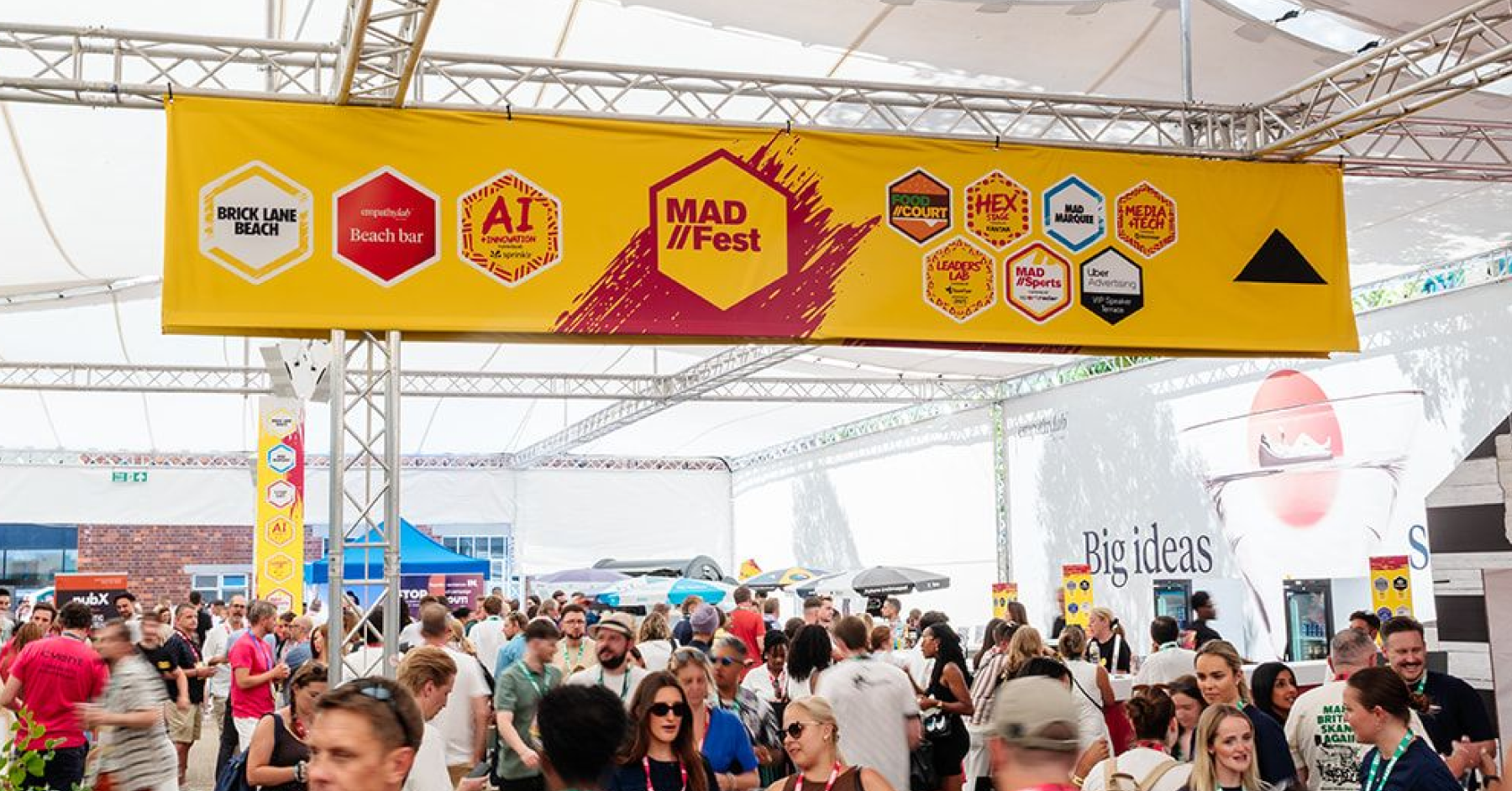
Our team spent two days at MAD//Fest in London, speaking with marketers, creative leaders, media teams, and AI specialists about where the industry is heading. While there were plenty of discussions around new technologies, changing consumer behaviour and measurement, one topic consistently dominated conversations: AI and automation.
Interestingly, the conversation has moved beyond whether brands should adopt AI. That question has largely been answered. Instead, the focus is now on how AI and automation can be implemented in a way that improves creative quality, strengthens brands and delivers better business outcomes.
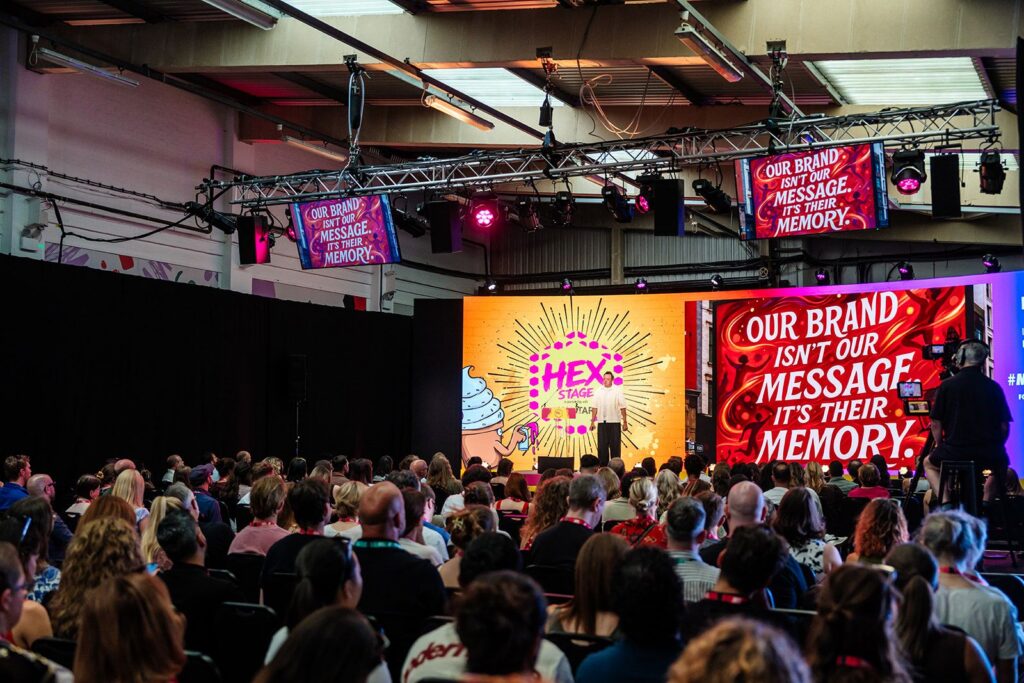
Four themes came up repeatedly.
1. Speed is no longer the challenge; quality is
Generative AI has made it remarkably easy to create content at scale. The concern many marketers expressed was not production capacity. It was creative effectiveness.
Several speakers and attendees shared a similar sentiment. AI is capable of producing huge volumes of creative incredibly quickly, but speed alone doesn’t create campaigns that people remember. If every brand is using similar models to generate similar assets, there is a real risk that advertising becomes increasingly generic.
The challenge, therefore, shifts from asking, “How quickly can we make more ads?” to “How do we make better ads?”
The consensus was that human creativity remains the differentiator. AI should accelerate execution and remove repetitive work, allowing creative teams to spend more time on strategy, ideas, storytelling, and developing concepts that genuinely resonate with audiences.
2. Scaling without direction creates inconsistency
Another recurring theme was that AI amplifies whatever process already exists.
If a brand has clear creative direction, strong design systems, and well-defined governance, AI can dramatically increase productivity while maintaining consistency.
If those foundations do not exist, AI simply scales inconsistency. One quote that particularly resonated with me was: “Scaling is risky if you don’t know what you’re scaling.” It perfectly captures the challenge many organisations are now facing.

As brands begin producing hundreds or even thousands of creative variations across channels, markets and audiences, governance becomes increasingly important. Brand guidelines, approval workflows, reusable templates and creative guardrails are not barriers to creativity. They are what allow organisations to scale confidently.
Rather than restricting creative teams, these frameworks ensure that every asset remains recognisably on brand, regardless of how many versions are being produced.
3. Creating more isn’t enough, you need to learn from it.
One of the strongest undercurrents throughout the event was that AI is not just changing how much creative brands can produce. It is changing how quickly they can learn.
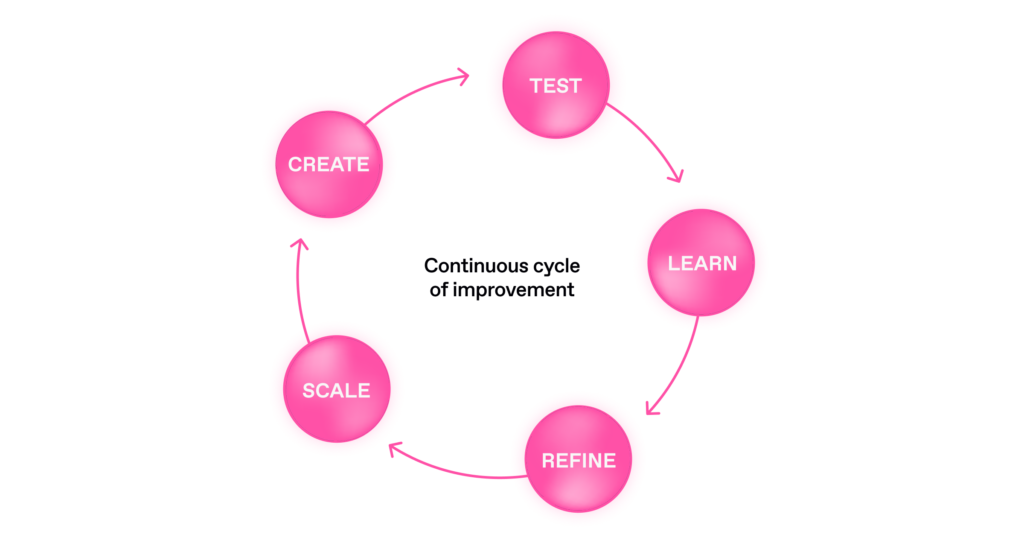
Generating more creative variations only creates value if those variations are continuously tested and measured. The brands seeing the greatest success are building a feedback loop into their creative process. They create multiple versions, test them with different audiences, analyse performance and use those insights to inform the next iteration.
This creates a continuous cycle of improvement: create, test, learn, refine and scale.
Creative performance data is becoming just as valuable as the creative itself. Understanding which headlines, visuals, calls to action, layouts and messaging resonate with different audiences allows marketers to move beyond assumptions and make evidence-based creative decisions.
Over time, these insights do not just improve individual campaigns. They create a deeper understanding of what resonates with different audiences, making every future campaign smarter than the last.
4. Personalization remains the ultimate goal
Despite all the discussion around AI and automation, the end objective has not changed. Brands still want to deliver advertising that feels more relevant to individual consumers.
AI and automation are making personalization at scale increasingly achievable. The ability to adapt messaging, imagery, products, languages, formats and offers for different audiences can now be executed far more efficiently than ever before.
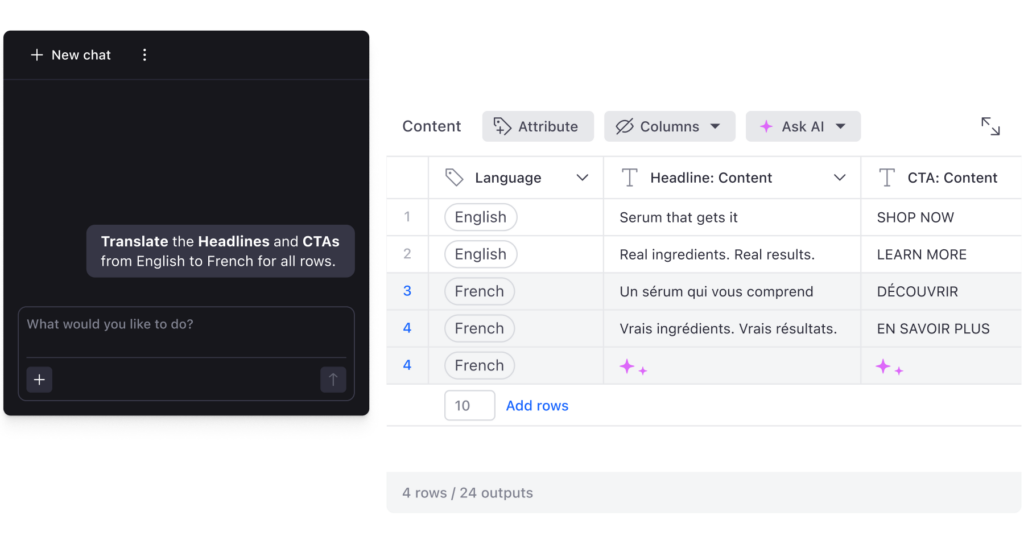
However, personalisation cannot come at the expense of consistency.
The brands making the greatest progress appear to be those combining AI-powered content generation, creative automation, robust governance and continuous performance insights. AI helps accelerate content creation. Automation enables that content to be adapted and distributed efficiently across channels and audiences. Governance ensures every execution remains on brand. Testing reveals which creative elements truly resonate.
Together, these capabilities enable brands to deliver increasingly personalised experiences with confidence, improving both customer relevance and campaign performance over time.
What this means for Celtra
Listening to these conversations reinforced something that has always been central to Celtra‘s approach. Our value has never simply been helping brands produce more creative.
It is about helping them produce more creative without sacrificing control, while giving teams the ability to continuously learn and improve.
As organisations increasingly embrace AI and automation-powered workflows, the need for governance becomes even more important:
- Creative teams need confidence that assets remain on brand.
- Marketing teams need the flexibility to personalise campaigns at scale.
- Media teams need visibility into which creative elements are actually driving performance, so future campaigns become smarter with every iteration.
These are not separate challenges, They are all connected. AI accelerates content creation, Automation scales and adapts that content across channels, formats, markets and audiences, Governance protects the brand and Creative insights reveal what resonates with audiences. Together, they create a continuous cycle of optimisation that enables brands to produce better creative, deliver more personalised experiences and improve performance over time.
The conversations at MAD//Fest suggested that the industry’s next chapter is not about replacing people with AI or generating as much content as possible. It’s about combining AI, automation, strong creative systems, clear governance and intelligent workflows that allow brands to move faster, protect what makes them distinctive and continually improve the effectiveness of every campaign.
If there was one overarching takeaway from the event, it was this:
AI and automation may make content creation and scaling easier, but creative quality, brand consistency, continuous testing and actionable insights are becoming the real competitive advantages.