Imagine spending millions on a global media buy only for your audience to scroll past because they didn’t realize the ad was yours. Did you know that consistent brand presentation across all platforms can increase revenue by up to 23%? For enterprise brands, the cost of “close enough” is higher than you think. In a world of infinite scrolls and 2-second attention spans, understanding how to create cohesive branding across all channels and markets can be the difference between a high-performing campaign and expensive background noise.
What is cohesive branding?
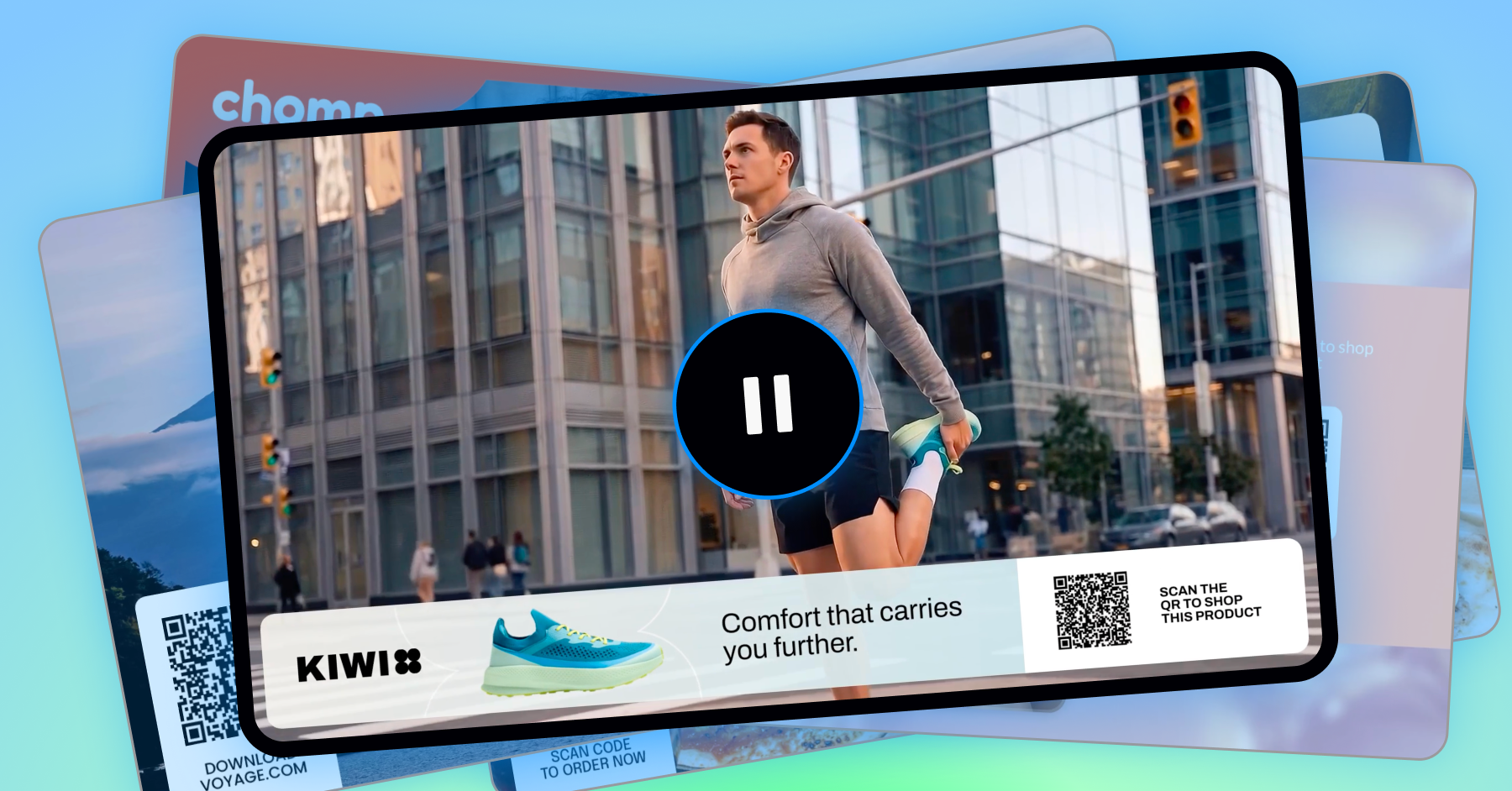
Cohesive branding is the practice of maintaining a unified identity across every marketing touchpoint. It ensures that whether your audience sees a 6-second YouTube bumper, a retail media banner, or a localized Instagram Reel, the experience feels like a single, continuous conversation.
In the modern landscape, achieving this is notoriously difficult. Marketing teams must now juggle a fragmented mix of digital and offline channels, each with its own technical specs and “vibe”, making it easy for the brand’s core identity to get lost in translation.
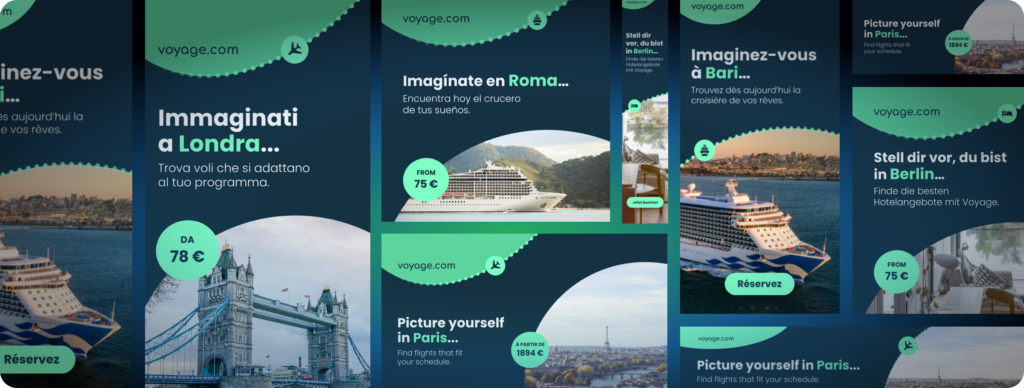
A single global campaign often needs:
- Dozens of formats across social, display, native, and retail media placements
- Multiple languages and regional compliance variations
- Local promotions with different pricing and product availability
- Ongoing creative refresh cycles to avoid fatigue
Multiply that across markets and teams, and small inconsistencies turn into systemic drift. Without a structured system, cohesive branding begins to unravel.
What constitutes cohesive branding in ad creative?
Cohesive branding goes far beyond placing your logo in the same corner. It’s the set of recognizable signals that tells someone, immediately and subconsciously, that this message comes from your brand.
For ad creatives, cohesive branding typically includes:
- Visual identity: Consistent logo placement, color palette, typography, and imagery that remain aligned across formats, sizes, and channels.
- Messaging and tone: A clear voice and copy style that feels connected across social, display, CTV, retail media, and localized campaigns.
- Layout and structure: Predictable hierarchy, spacing, and compositional rules that create familiarity and make your brand recognizable at a glance.
- Motion and behavior: Consistent animation styles, transitions, and pacing that reinforce how your brand feels in video and rich media environments.
When these elements stay aligned across campaigns, every impression reinforces recognition instead of forcing your audience to re-evaluate who you are.
The benefits of cohesive branding across campaigns
Cohesive branding makes your advertising more effective because it removes friction. When people instantly recognize your brand, they focus on the message instead of processing who it is from. That recognition compounds over time, which is especially valuable for global brands with always-on media strategies.
Here are the biggest benefits of cohesive branding in advertising:
- Faster brand recognition across markets and channels
- Higher trust because the experience feels consistent and established
- A smoother customer journey across all touchpoints
- Stronger engagement and improved CTR, because familiarity supports conversion behavior
- Less creative rework since your teams operate from a shared foundation
Over time, cohesive branding helps your campaigns build momentum instead of starting from zero every time. Each consistent impression reinforces familiarity, making it easier for global brands to earn attention, trust, and results across every channel.

The biggest challenges global brands face with cohesive branding
If cohesive branding were easy, every multinational brand would have it locked down. The reality is that global advertising teams are constantly fighting complex campaign setups that make consistency difficult to maintain, especially at scale.
Fragmented platform requirements
A single creative concept must now perform across the entire omnichannel ecosystem. Each environment, from the open web to walled gardens, introduces new specs, ratios, and animation rules. Manually rebuilding for every unique placement is exactly where small deviations sneak in, and brand integrity begins to fracture.
Scaling personalization without brand drift
Global brands need ads to feel local, but “local” often means managing thousands of variations in language, pricing, and regional legal disclaimers. When this is handled through manual, disconnected workflows, the pressure to “just get it live” often leads to designers taking shortcuts that pull the creative away from the core brand identity.
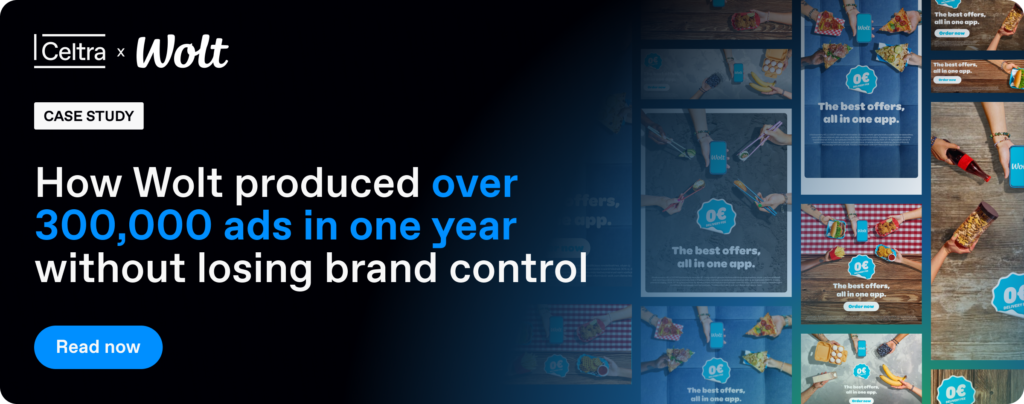
Wolt is a clear example of what happens when localization is treated as a system, not a scramble. With Celtra, Wolt produced over 300,000 creatives in a single year and achieved an over 20x increase in productivity while maintaining complete brand control.
The decentralized governance gap
Even strong brand guidelines get interpreted through the lens of regional teams, agencies, and internal studios. Without built-in guardrails and a “single source of truth”, these minor adjustments slowly erode the instant recognition you are trying to build across channels.
Approval workflows slow everything down
Brand governance is essential, but disconnected review processes create version confusion and launch delays. The more campaigns you run, the harder it becomes to maintain consistency without slowing down the media team’s need for speed.
How to create cohesive branding at scale with creative automation
To maintain cohesive branding across global ad campaigns, guidelines alone are not enough. You need a structured creative production system that embeds your brand rules directly into how creative is built, adapted, and activated.
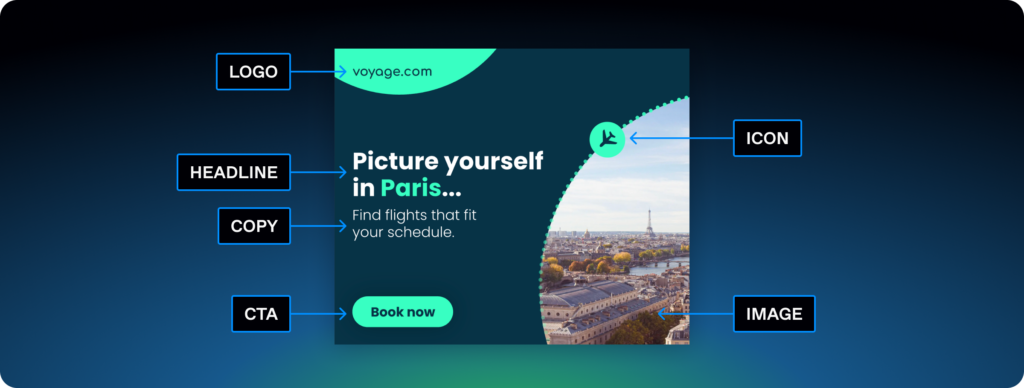
Build modular templates that enforce brand structure
Instead of rebuilding assets for every market and channel, create modular templates that lock what should never change: layout, typography, and logo placement. Teams can then safely adapt messaging and pricing without redesigning from scratch.
Use GenAI with built-in brand governance to maintain consistency
As GenAI accelerates creative production, the risk of “branding drift” has never been higher. While generic AI tools offer speed, they often lack the context required to maintain enterprise standards. Celtra’s agentic workflows allow teams to reap the benefits of generative speed while ensuring every output is brand-safe, media-ready, and proven to perform.
Activate across channels without duplicating work
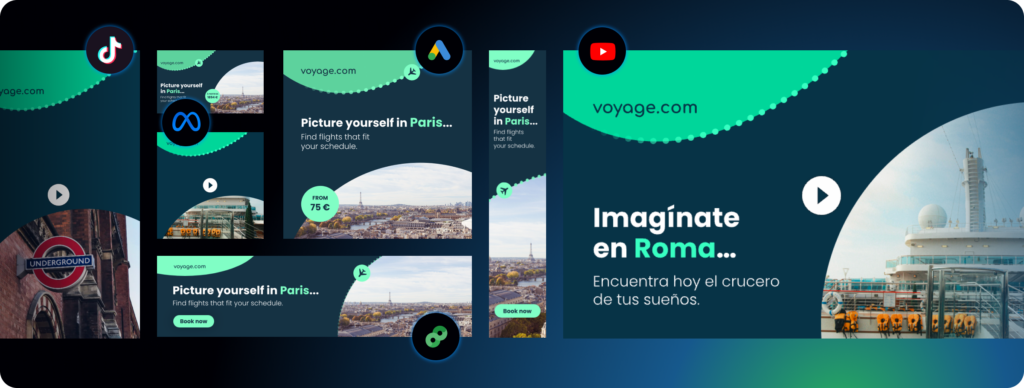
Creative consistency breaks fastest when teams recreate the same idea separately for every placement. Celtra empowers marketing teams with an end-to-end workflow, helping them deliver media-ready campaigns across any digital channel from one place.
Why cohesive branding is also a performance advantage
Cohesive branding strengthens both brand’s identity and results. Recognizable ad creative builds trust, supports testing, and enables faster refresh cycles without introducing inconsistency. When ad creative is structured and scalable, teams can produce more variations, enter new markets faster, and maintain alignment without rebuilding from scratch. That is how ad creative becomes a driver of advertising performance rather than an operational bottleneck.
If you are managing global campaigns and struggling to keep every creative consistent, explore how Celtra Creative Automation helps teams produce on-brand, performance-ready advertising at scale.
Frequently Asked Questions
Cohesive branding is the practice of keeping a consistent brand identity across all marketing channels and touchpoints, including visuals, tone of voice, layout structure, and motion design.
Global brands operate across multiple markets, platforms, and teams, which increases the risk of inconsistent execution. Cohesive branding protects recognition, builds trust, and improves campaign efficiency when you are running high volumes of creative.
Cohesive branding includes consistent logo usage, typography, brand colors, imagery style, tone of voice, layout structure, and motion behavior across all ad creatives.
The most reliable approach is to use structured templates, brand governance rules, and scalable workflows that allow localization without design drift. Creative automation platforms like Celtra make this possible by enforcing consistency while supporting high-volume production.
Celtra helps teams scale on-brand advertising through modular templates, automated resizing and adaptation, localization workflows, governance controls, and activation-ready creative outputs that remain consistent across channels and markets.